

ZEHNIT Showcases Vestibular and Balance Solutions at Shanghai Fair Healthcare Sessions in Thailand and Malaysia
Exhibition
Advancing Vestibular Care Through Exchange and Experience: ZEHNIT at Bárány 2026
26 Oct, 2026
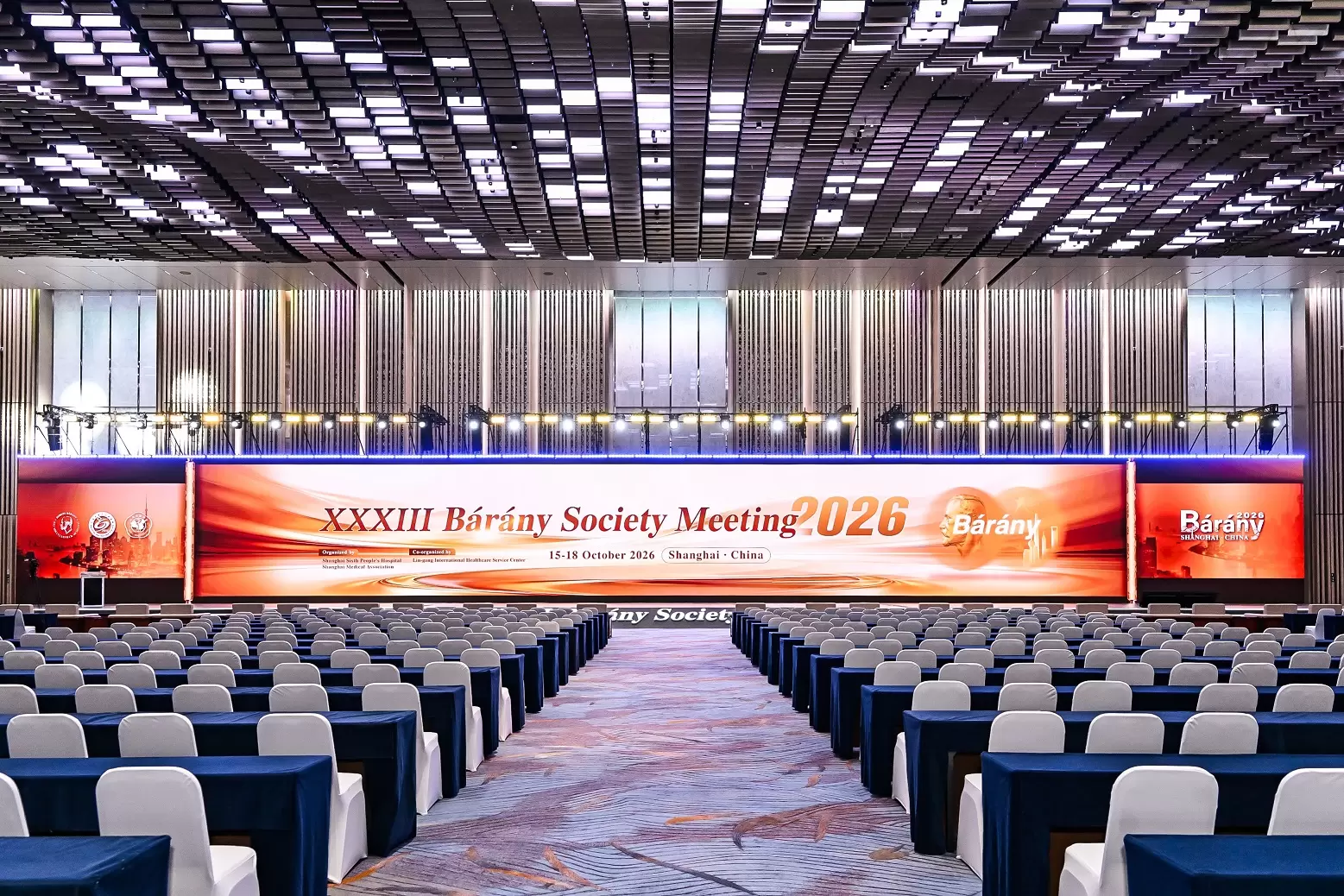
The XXXIII Bárány Society Meeting concluded in Shanghai after four days of scientific exchange, clinical discussion, and hands-on exploration. Bringing together clinicians, researchers, professors, and industry professionals from around the world, the meeting provided an important platform for sharing new perspectives on vestibular assessment, diagnosis, treatment, and rehabilitation.
Throughout the meeting, the ZEHNIT booth became a space where visitors could not only explore new technologies, but also discuss how they could be applied in clinical practice.
The OCR Test at the Center of the Conversation
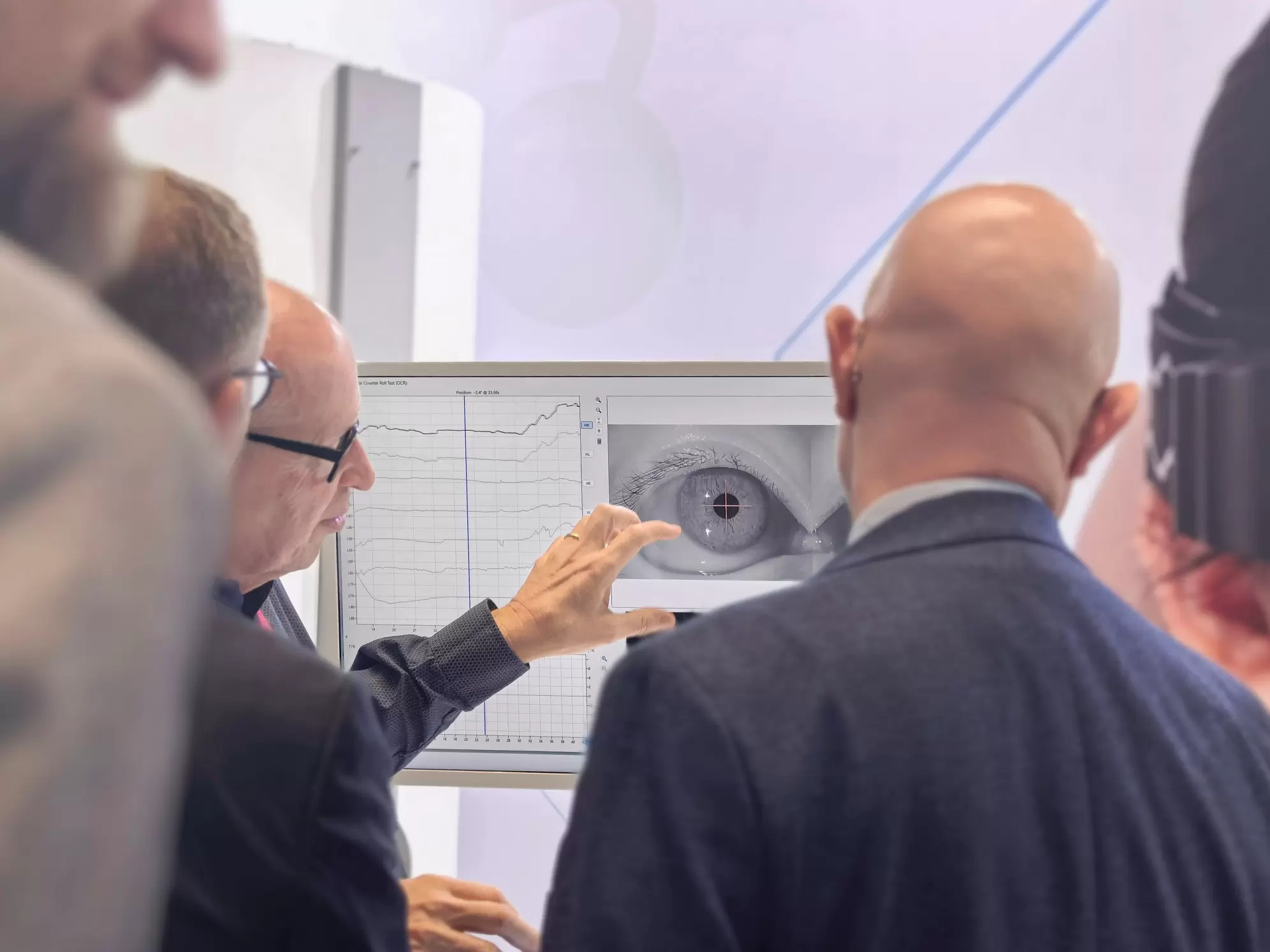
The ocular counter-roll (OCR) test emerged as one of the most discussed topics at the ZEHNIT booth.
Visitors were interested in more than the availability of the OCR test itself. Many asked detailed questions about how the test is performed, how its results should be interpreted, and how the recorded responses could be understood in different clinical contexts. A visual target that moves with the head also attracted considerable attention, prompting discussions about how visual fixation, head position, and torsional eye-movement data can be coordinated during the OCR test.
These conversations naturally extended to the recording and analysis of torsional eye movements. Because subtle torsional responses can be difficult to identify through observation alone, image quality, tracking stability, and quantitative analysis are particularly important. This capability was demonstrated under realistic conditions during the hands-on sessions, where many participants were wearing eye makeup—an element that can make reliable eye tracking more challenging. Even under these conditions, VertiGoggles maintained stable tracking and produced clear, consistent torsional eye-movement recordings. Its performance attracted considerable interest and positive feedback, particularly regarding the precision and robustness of torsional nystagmus detection.
Skew deviation was another topic raised during the meeting. Discussions focused on the value of recording both eyes simultaneously when observing vertical ocular misalignment and comparing the responses between the two eyes. Together, the conversations around the OCR test, torsional nystagmus, and skew deviation reflected growing interest in obtaining more complete and objective eye-movement information.
Turning Clinical Interest into Hands-On Experience
The interest generated by these discussions quickly translated into hands-on experience.
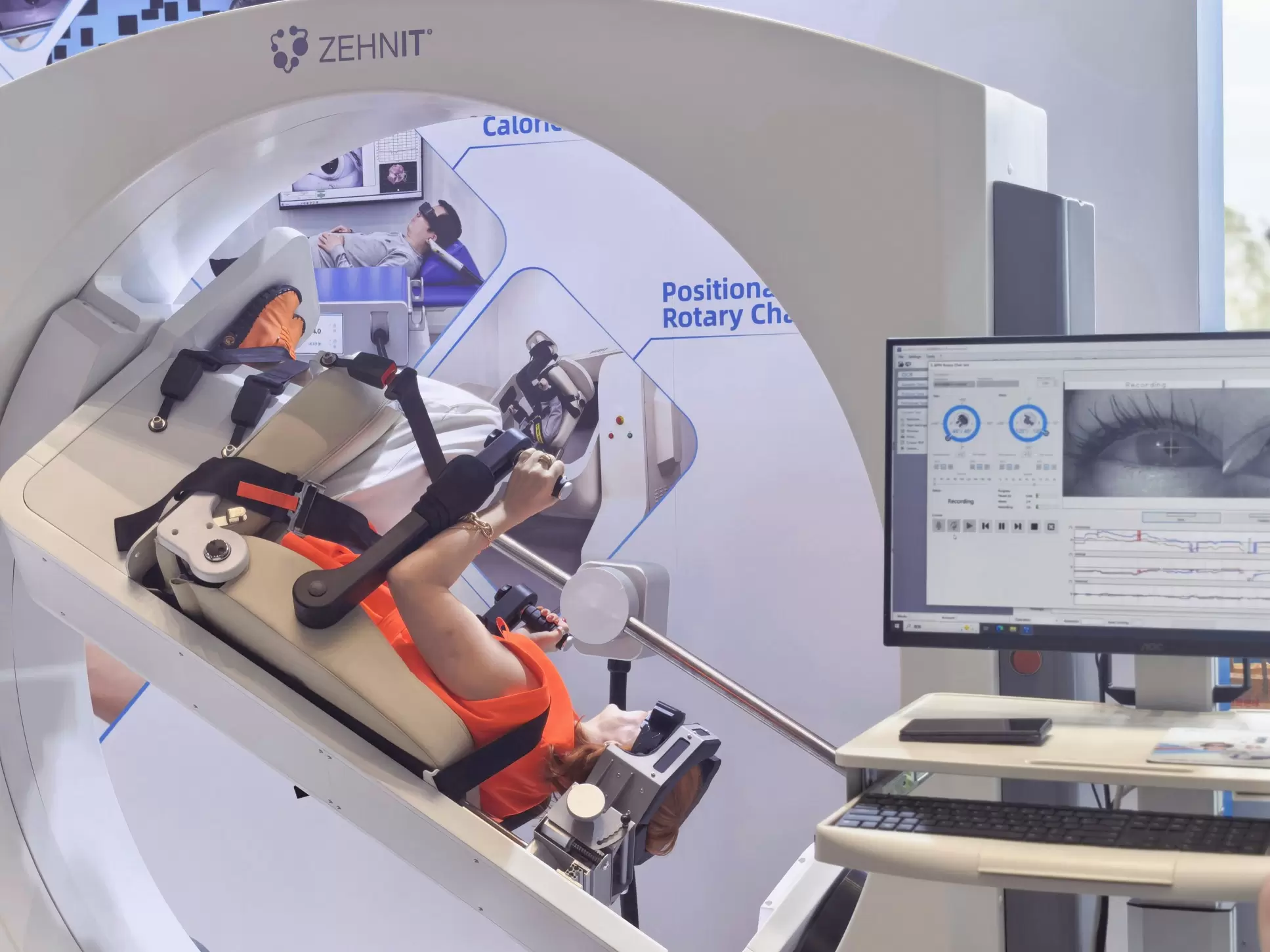
Many attendees—including leading professors and experienced vestibular clinicians—personally tried the systems displayed at the ZEHNIT booth. VertiChair Compact, VertiGoggles, and VertiRehab attracted particularly active participation, allowing visitors to move beyond viewing product demonstrations and experience the technologies directly.
With VertiChair Compact, participants experienced controlled positional movements and explored its role in BPPV examination and treatment workflows. Discussions also extended to AI-assisted analysis and more intuitive visualization of BPPV positional test results—topics that were further explored in the meeting’s lecture program.
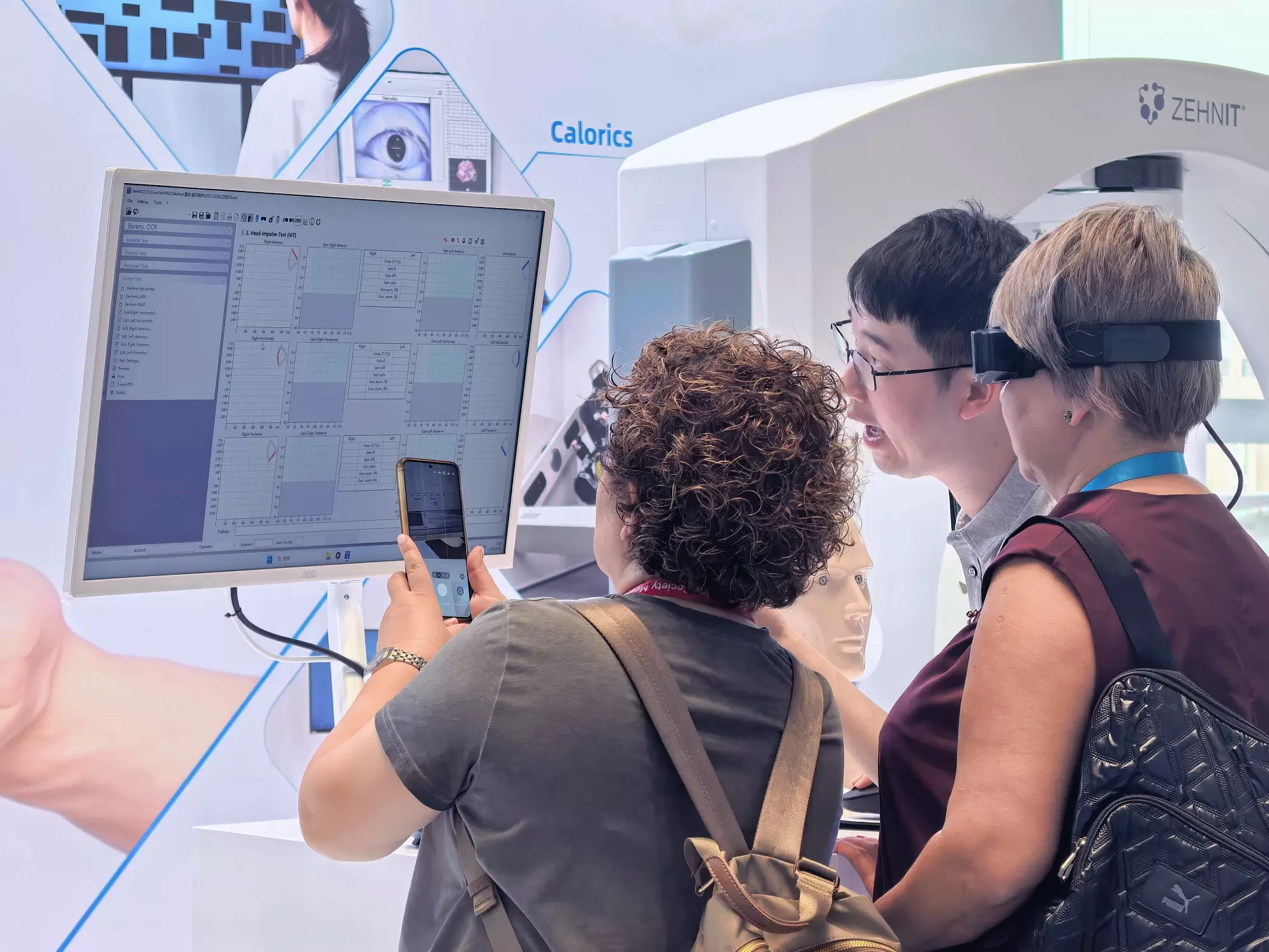
VertiGoggles allowed visitors to experience binocular eye-movement recording firsthand. Many responded positively to its ability to perform both VNG and vHIT with a single device, recognizing its value in reducing equipment costs, simplifying clinical workflows, and improving efficiency. Its comfortable fit was also well received, as a better wearing experience can support patient cooperation and compliance during testing.
VertiRehab offered a different type of hands-on experience. Through its interactive exercises, visitors explored how motion-sensing technology could support gaze stabilization and balance training.
The hands-on experiences led to practical discussions about how each system could support clinical workflows, examination efficiency, and patient experience.
Making Eye-Movement Recording More Portable
Following the discussions about advanced eye-movement assessment, visitors also showed strong interest in how nystagmus could be recorded more conveniently across different clinical settings.
VertiMobile and VertiGoggles Wirelss demonstrated a portable and straightforward approach to eye-movement recording. Using a mobile device, clinicians can record eye-movement video together with head-position information, providing important context when reviewing positional responses.
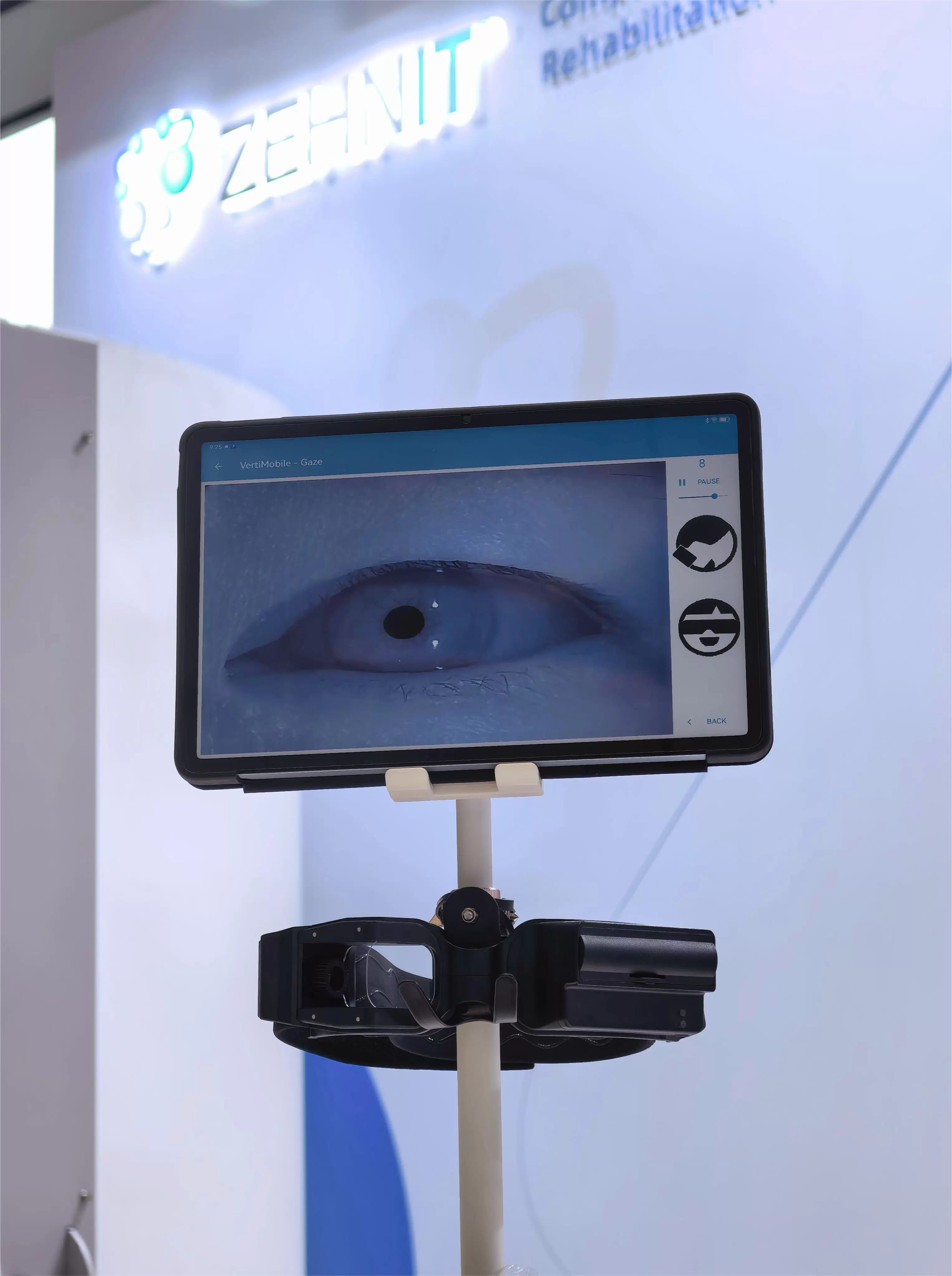
Its portable setup and intuitive operation were particularly relevant to bedside examinations and other situations in which a conventional fixed examination environment may not be available. Visitors responded positively to the convenience and ease of use of the system, recognizing its potential to make eye-movement documentation more practical in everyday clinical work.
Making Vestibular Rehabilitation Easier to Sustain
Beyond assessment and diagnosis, discussions also turned to a practical challenge in vestibular rehabilitation: helping patients continue training consistently over time. Because rehabilitation often depends on repeated exercises, motivation and adherence can be just as important as the training program itself, especially when exercises need to continue outside the clinic.
Many visiting clinicians and rehabilitation professionals saw value in VertiRehab’s potential to help patients continue their training at home. Its game-based format was viewed as a practical way to give patients clearer goals, make repetitive exercises more engaging, and support the continuation of gaze stabilization and balance training beyond supervised clinical sessions.
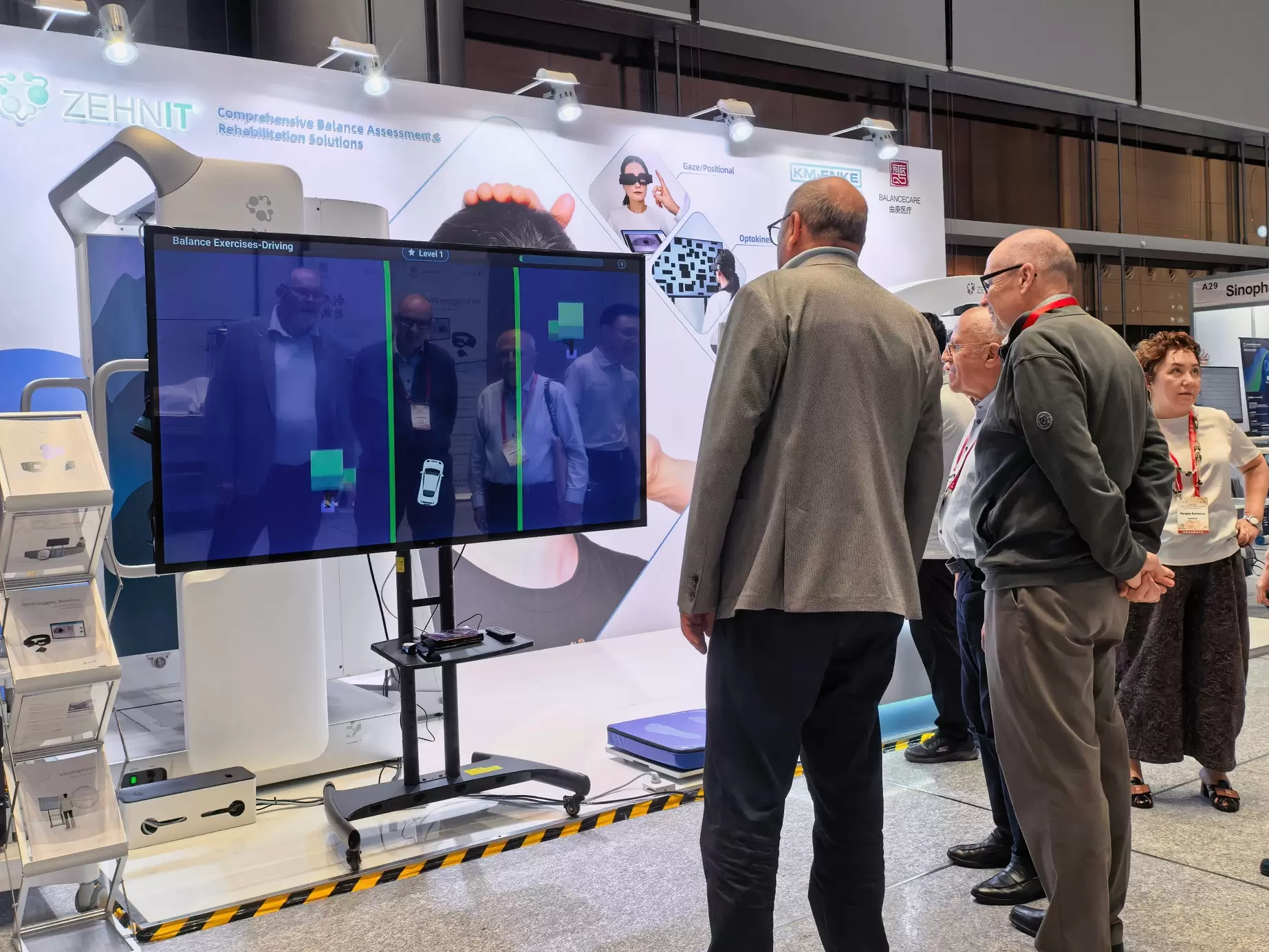
Participants also exchanged views on the use of virtual reality in vestibular rehabilitation. Although VR can provide immersive and interactive training environments, its wider use may be limited by the cost of the hardware and patient tolerance. Some people experience cybersickness, increased dizziness, nausea, or visual discomfort when using immersive 3D systems. These discussions highlighted that rehabilitation technology should be evaluated not only for its novelty, but also for its accessibility, tolerability, and suitability for sustained home use.
Connecting Technology with Academic Discussion
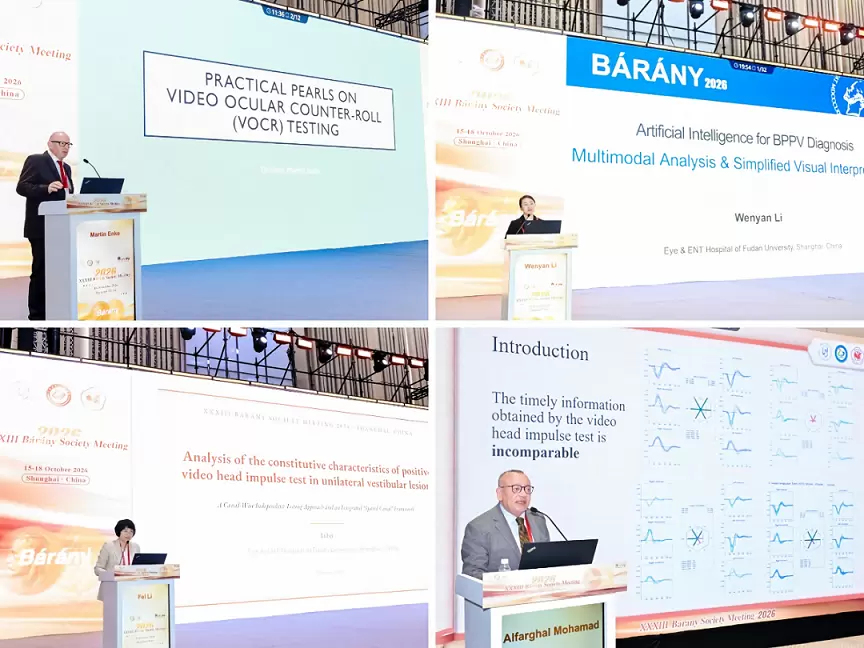
Several academic presentations explored questions that also emerged during conversations at the booth, particularly how complex vestibular data could be presented in ways that are easier to interpret and apply in clinical practice.
One example was the presentation on AI-assisted BPPV diagnosis and simplified visual interpretation. By bringing head position, nystagmus characteristics, and responses from all six semicircular canals into a single overview, the proposed chart could make positional test results easier to understand while helping clinicians recognize characteristic patterns and follow changes such as canal conversion.
Other presentations approached vestibular assessment from different directions, but repeatedly returned to the importance of measurement quality and careful interpretation. Across these discussions, a broader direction emerged: combining reliable data acquisition with integrated analysis and clearer presentation of results, so that complex findings can be understood and applied more effectively in clinical practice.
Open Exchange Across the Industry
Bárány 2026 also created valuable opportunities for technical exchange with industry peers.
These conversations covered examination methods, system design, clinical implementation, and the evolving needs of professionals working in vestibular and balance care. Sharing perspectives with other companies and technology teams offered a broader view of current developments across the field and encouraged constructive discussion about future directions.
ZEHNIT values this type of open professional exchange. Progress in vestibular care depends not only on individual technologies, but also on continued dialogue among clinicians, researchers, developers, and industry partners.
Continuing the Conversation Beyond Shanghai
What stood out at Bárány 2026 was not only the interest in individual devices, but also the depth of the conversations surrounding them.
A question about how to perform the OCR test could develop into a discussion about torsional eye-movement analysis. An equipment demonstration could lead to an exchange about clinical standardization and more intuitive result interpretation. An interactive rehabilitation experience could prompt practical questions about maintaining patient motivation and extending training into the home.
These exchanges demonstrated that meaningful innovation is not defined by adding more devices or tests alone. Its value lies in helping clinicians obtain more complete information, understand results more clearly, and apply technology more effectively in clinical practice.
ZEHNIT sincerely thanks all the professors, clinicians, researchers, p artners, visitors, and industry colleagues who visited the booth, experienced the systems, and shared their perspectives during the meeting.
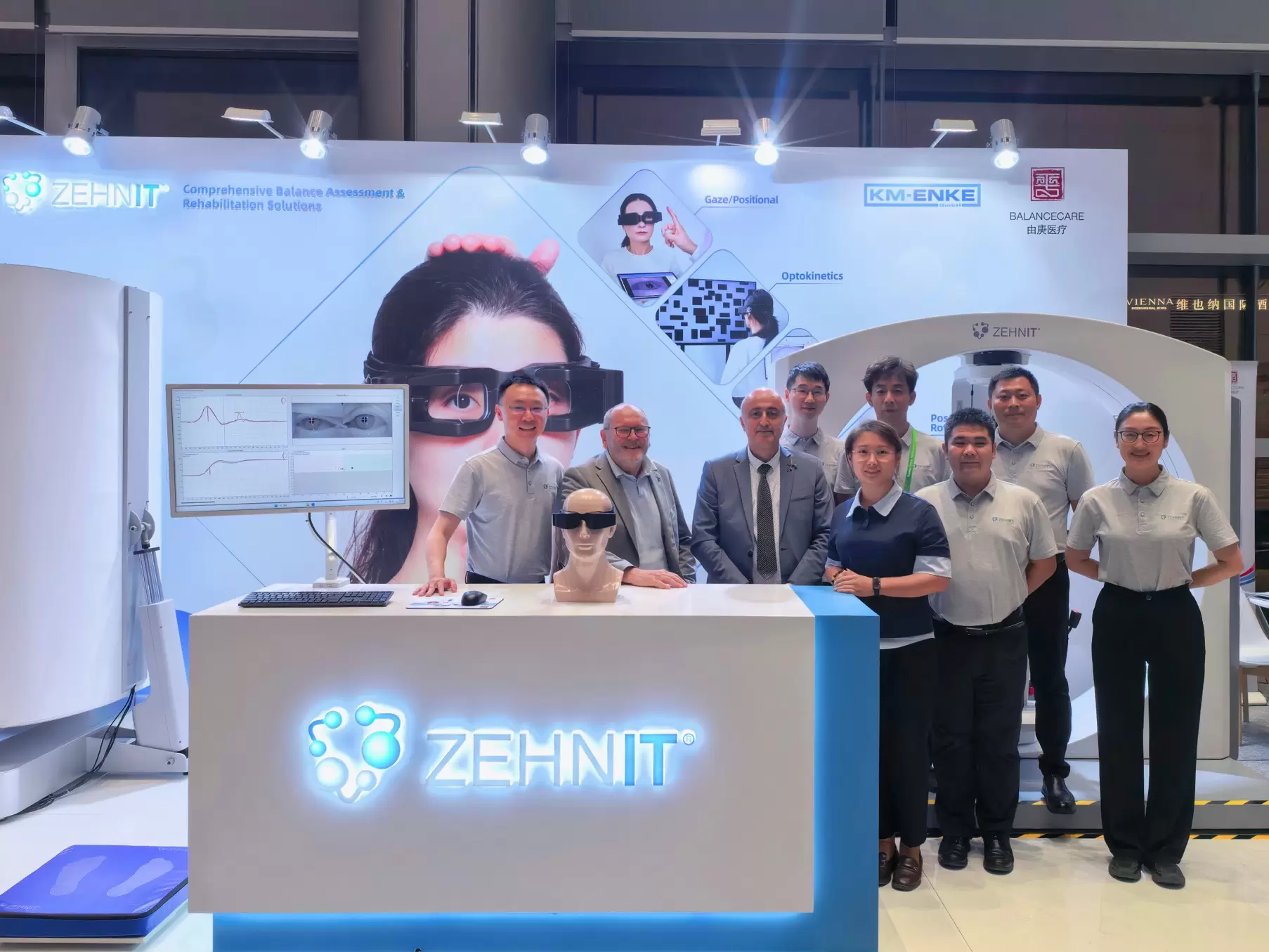
The insights gathered in Shanghai will continue to inform ZEHNIT’s work as we develop more objective, accessible, and clinically practical solutions for vestibular assessment, diagnosis, treatment, and rehabilitation.
About ZEHNIT
ZEHNIT Medical Technology develops innovative equipment and software solutions for the diagnosis and rehabilitation of vestibular and balance disorders. Founded in 2015 by a multidisciplinary team of doctors and engineers, the company is dedicated to advancing clinical assessment technologies and fostering long-term global partnerships in healthcare.
For partnership inquiries or further information, please contact us at: info@zehnit.cn

